Unknown : The Guardian
| Total Responses: | 16 |
| Average Quality Score: | 77.4 |
| Average Bias Score: | 3.7 |
| gen: 2026/08/31:17:08 in 1 min 8.8 secbias: 6 (Center-Left) |
| type: colorquality: 74 |
| pts: 0 |
#oil trade#venezuela#international#politics#energy#delcyrodriguez#oil#sanctions#us-venezuela#donaldtrump】【、】【
Leftist
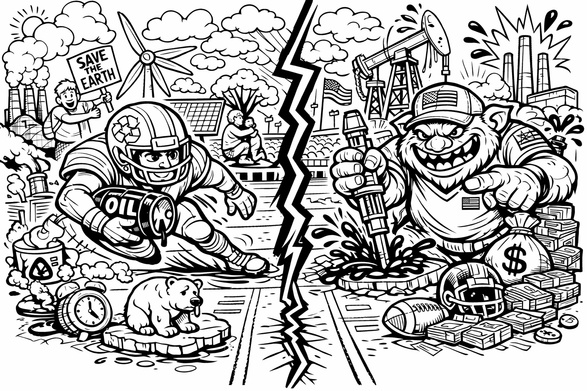
Hold onto your helmets, folks! Rodriguez is taking a bold stance,
scooping the oil like a leftist quarterback launching for a greener,
global win. But wait! Why align with Trump, the opponent of fair play?
This coalition is like throwing a climate-change interception!
Let’s hope this oil saga leads to renewable breakthroughs
that level the energy playing field!
Rightist
Now that’s what I call a power play! Rodriguez is drilling down,
gaining yardage on America's oil field of dreams with Trump.
With those vast oil reserves, it's like unlocking an energy championship!
This move tackles the left's green agenda head-on, driving jobs,
energy independence, and prosperity straight into the goalpost
of national interest!
 | author: | Unknown | institution: | The Guardian | ¿porque no los dos? |
| tl;dr | The image shows a Guardian news article about Venezuela’s vice-president Delcy Rodríguez defending the long-term (“endless”) benefits of an oil-related deal involving Donald Trump/Trump-linked interests, framing it as advantageous for Venezuela and potentially relevant to US–Venezuela relations and global energy markets. The piece appears to mix reporting with political context about sanctions, oil access, and diplomatic signaling, using Rodríguez’s claims as the news hook while situating them within wider geopolitical stakes. | ||||
| deeper: | The headline framing (“defends”, quoting “endless”) and story selection emphasize political controversy and power dynamics around Trump and Venezuelan oil, which can subtly steer readers toward skepticism of the deal’s motives. Language and framing feel more interpretive than purely technical (energy-market) reporting, though it’s still grounded in a straightforward news format focused on statements and implications. Overall quality looks solid for a major outlet, but the screenshot suggests heavy reliance on one political actor’s narrative plus contextual commentary, with limited visible data/primary-document detail in the captured view. | ||||
media: | |||||
| gen: 2026/08/31:15:51 in 40.0 sec (old)bias: 3 (Center) |
| type: newsquality: 74 |
| pts: 0 |
 | author: | Unknown | institution: | The Guardian | ¿porque no los dos? |
| tl;dr | The image is a screenshot of a Guardian news article about a rescue operation in Nepal, where emergency workers are trying to reach a large number of people feared trapped inside hydropower tunnels after an incident at/near a hydropower project site. The piece describes the scale of the emergency, the difficult conditions for rescuers, and the uncertainty around casualties while authorities and teams attempt to access the tunnel area and account for missing workers. | ||||
| deeper: | The language is mostly straight news reporting: it focuses on verified facts (rescue efforts, numbers feared trapped, site conditions) and emphasizes uncertainty where outcomes aren’t yet confirmed. Any bias is limited to sympathetic framing toward victims and rescuers, which is common in disaster coverage. Quality appears solid—clear headline, relevant on-scene imagery, and topic focus—though the screenshot limits verification of sourcing depth (e.g., whether multiple independent sources, technical experts, or primary documents are cited). | ||||
media: | |||||
| gen: 2026/08/31:15:14 in 47.1 sec (old)bias: 6 (Center-Left) |
| type: newsquality: 74 |
| pts: 0 |

 | author: | Unknown | institution: | The Guardian | ¿porque no los dos? |
| tl;dr | The piece argues that the Trump-era Department of Homeland Security expanded or relied on a little-known legal authority to conduct surveillance and information-gathering that swept in journalists, nonprofits, and labor unions. It frames this as a serious civil-liberties threat, warning about weak oversight, broad discretion, and chilling effects on press freedom and organizing. The article emphasizes alleged secrecy and mission creep, and calls for stronger limits and transparency around DHS investigative powers. | ||||
| deeper: | The article is strongly framed and morally loaded (“outrageous”), with emphasis on rights harms and a critical posture toward Trump-era DHS. That rhetorical approach increases perceived bias, though the topic (state surveillance and oversight) is newsworthy. Quality appears solid for an explanatory/advocacy-style report: it focuses on a specific legal mechanism, describes who is affected, and highlights accountability gaps. Without seeing clear presentation of DHS’s best counterarguments or detailed primary-document excerpts in the screenshot, it reads more one-sided than purely investigative. | ||||
media: | |||||
| gen: 2026/08/28:05:07 in 43.1 sec (old)bias: 3 (Center) |
| type: newsquality: 78 |
| pts: 0 |
 | author: | Unknown | institution: | The Guardian | ¿porque no los dos? |
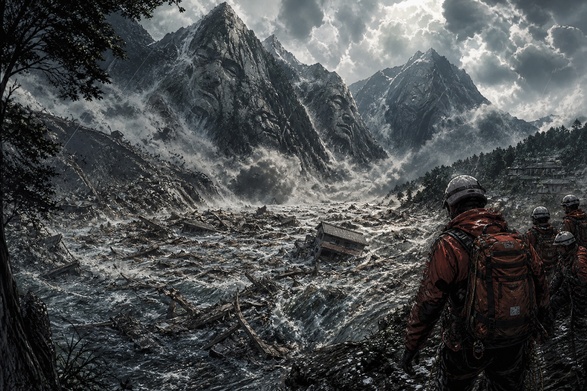
| tl;dr | The image shows a Guardian report on severe flooding and landslides in Nepal, describing rising casualties and widespread damage. It cites official figures from Nepali police and notes difficulties and safety concerns affecting rescue operations, including a reported halt to rescue work at an “epicenter” area due to continued flood risk. The piece frames the situation as an ongoing monsoon-driven disaster with disrupted transport and urgent humanitarian and response needs. | ||||
| deeper: | The article reads as a straight disaster update: it focuses on death tolls, rescue constraints, and infrastructure damage, leaning heavily on official statements (police/state media). Bias is limited, mainly in story selection and emphasis on dramatic impacts, which is typical for breaking disaster coverage. Quality is solid: clear headline, concrete figures, and attribution; weaker points are reliance on official sources and limited space (in the screenshot) for independent verification or deeper context about preparedness, governance, or historical risk. | ||||
media: | |||||
| gen: 2026/08/25:16:31 in 36.0 sec (old)bias: 2 (Center) |
| type: newsquality: 78 |
| pts: 0 |
 | author: | Unknown | institution: | The Guardian | ¿porque no los dos? |
| tl;dr | The article reports an attack on a mosque in Dekara village in Nigeria’s north-central Niger State, where gunmen abducted worshippers—especially women, children, and older people. It cites a video showing captives and armed men, quotes residents who identified people in the footage, and notes police had not confirmed the exact number taken. The report situates the incident within Nigeria’s broader wave of mass kidnappings for ransom and insecurity affecting multiple regions. | ||||
| deeper: | The writing is largely straight-news: it attributes claims to residents, references a posted video, and clearly flags uncertainty where official confirmation is missing (the number of abductees). It provides context about kidnapping-for-ransom patterns without heavy ideological framing or loaded language beyond standard conflict terms (“gunmen,” “bandits”). Quality is solid due to sourcing and caution, though it relies significantly on resident testimony and a video rather than independently verifiable official figures, which limits completeness. | ||||
media: | |||||
| gen: 2026/08/22:04:43 in 2 min 24.5 sec (old)bias: 3 (Center) |
| type: lolsquality: 74 |
| pts: 0 |
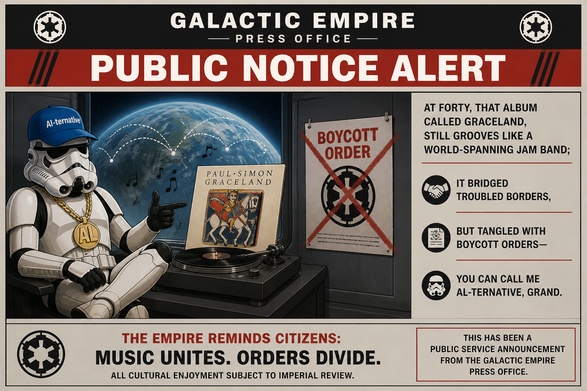
#music#album#controversy#south africa#anniversary#paul simon#graceland#apartheid#boycott#world music
 | author: | Unknown | institution: | The Guardian | ¿porque no los dos? |
| tl;dr | The image appears to be a newspaper-style feature from The Guardian/Observer era with the headline about “the power of Paul Simon’s Graceland at 10.” It revisits Simon’s 1986 album, focusing on its musical impact and longevity, and likely touches on the controversy around recording with South African musicians during apartheid-era cultural boycotts, alongside praise for the record’s collaborations and influence on “world music” audiences. | ||||
| deeper: | This reads like an arts feature/retrospective: its main “bias” is tonal—admiring the album and framing it as culturally significant—rather than pushing a partisan political agenda. Any political content (apartheid, boycott debates, cultural exchange vs. exploitation) is typically presented through narrative and commentary rather than hard evidence. Quality looks solid for a cultural piece (context, history, quotes/attribution likely), but the screenshot is too low-resolution to verify sourcing depth, counterarguments, or precise claims line-by-line. | ||||
media: | |||||
| gen: 2026/08/22:02:16 in 38.0 secbias: 2 (Center) |
| type: emojiquality: 78 |
| pts: 0 |

#ebola#healthcare#crisis response#international ai#public health#drc#who#publichealth#outbreak#congo
 | author: | Unknown | institution: | The Guardian | ¿porque no los dos? |
| tl;dr | The image is a screenshot of a Guardian news article about an Ebola outbreak in the Democratic Republic of the Congo. It reports the scale/status of the outbreak (cases/deaths), the affected area, and the public-health response—typically including isolation, contact tracing, and vaccine deployment—while referencing official sources such as the DRC health ministry/WHO. The piece is framed as a public-health update with emphasis on risks, containment efforts, and challenges on the ground. | ||||
| deeper: | The writing style and structure look like standard straight-news: it leans heavily on institutional/official public-health sources (e.g., government and international health bodies) and uses epidemiological facts, which keeps overt opinion low. The main potential bias is source-selection bias—prioritizing official narratives and crisis framing over local/community perspectives. Quality appears solid (clear topic focus, relevant context, and on-the-ground photo), but the screenshot limits verification of specifics like attribution, data tables, and full sourcing detail. | ||||
media: | |||||
| gen: 2026/08/17:18:49 in 40.2 sec (old)bias: 4 (Center-Left) |
| type: newsquality: 78 |
| pts: 0 |
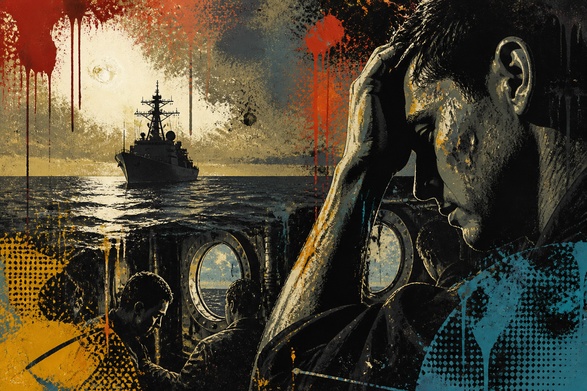
 | author: | Unknown | institution: | The Guardian | ¿porque no los dos? |
| tl;dr | The article reports that the US Navy destroyer USS Benfold lost propulsion in the South China Sea and drifted for about four days while repairs were made. It says the incident followed an “engineering casualty” and that the ship operated with limited onboard services during the outage (including reduced galley, sanitation, and air conditioning). The story situates the breakdown within the wider, high-stakes US–China operating environment in and around the South China Sea. | ||||
| deeper: | The piece is largely straight news and leans on official descriptions (e.g., the Navy’s account of an engineering casualty), which supports accuracy. It adds geopolitical framing that can steer interpretation, emphasizing tension and the optics of US naval readiness, but it does not read as overtly ideological. Quality is solid: clear headline, concrete timeframe, and attribution; however, the framing is somewhat sensational (“adrift”) and the screenshot format makes it hard to verify how many independent sources and technical details are included beyond official statements. | ||||
media: | |||||
| gen: 2026/08/11:16:14 in 1 min 21.0 secbias: 4 (Center-Left) |
| type: colorquality: 72 |
| pts: 0 |
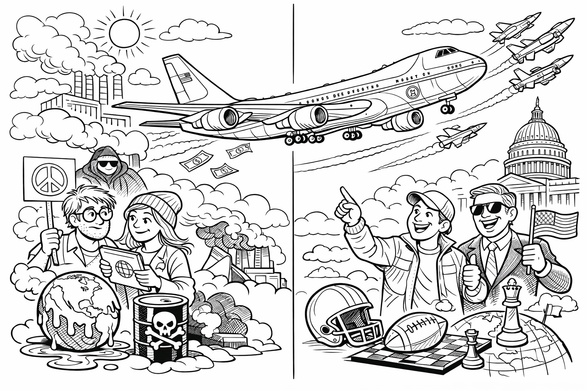
Leftist
Holy smokes! Air Force One's on the move! Think of it as a symbol of imperial power jetting across the skies, flexing muscles and burning fossil fuels like there's no tomorrow. Secret flights are the Super Bowl of global politics—making clandestine moves while the climate spins out of control. Nothing says 'progress' like stealthy maneuvers swerving transparency. But wait, people, it's always sunny above the clouds of privilege!
Rightist
Look at Air Force One! It's the heavyweight champ soaring through skies! Secret flights aren’t just strategic plays; they're buzzer-beaters on the global court. This is about projecting strength, folks! Navigating threats like a QB through defense, showing no retreat on international turf. Hey, diplomacy ain't easy, but nothing worth winning ever is! This is leadership, pure and simple—a full-court press for freedom!
 | author: | Unknown | institution: | The Guardian | ¿porque no los dos? |
| tl;dr | The screenshot shows a Guardian article describing a highly secured, partly secretive flight involving the U.S. presidential aircraft amid heightened regional tension and an alleged threat from Iran. The piece emphasizes the operational secrecy, security precautions, and diplomatic/military context in Turkey, framing the trip as a response to a volatile security environment. It reads as a reported narrative: scene-setting details plus broader geopolitical explanation of why the movement was sensitive. | ||||
| deeper: | The writing leans toward a security-and-diplomacy narrative that assumes the seriousness of the “Iran threat” framing, with limited visible space (in the screenshot) for competing interpretations or direct Iranian/Turkish rebuttal—mild framing bias. Quality is solid: a clear news-style structure, contextual background, and specific logistical detail. Limits: heavy reliance on unnamed officials/opaque security claims (hard for readers to verify) and a somewhat dramatized tone (“secret flight”) that can heighten perceived threat. | ||||
media: | |||||
| gen: 2026/08/07:16:34 in 1 min 3.3 secbias: 3 (Center) |
| type: eli5quality: 78 |
| pts: 0 |
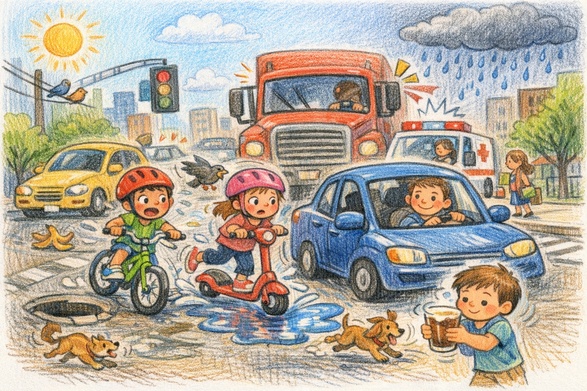
 | author: | Unknown | institution: | The Guardian | ¿porque no los dos? |
| tl;dr | The article reports analysis suggesting pedestrians in England and Wales who are struck by motorbikes or bicycles are more likely to suffer traumatic brain injuries than those struck by cars. It highlights that while motorbikes/cycles are involved in a smaller share of collisions, the head-injury proportion is higher, and discusses possible reasons (impact dynamics, underreporting, infrastructure). It includes calls from researchers for better data, safety measures, and street design that reduces conflict between pedestrians and two-wheeled vehicles. | ||||
| deeper: | The piece is largely evidence-led, anchored in a specific study/analysis and framed around injury outcomes rather than culture-war claims. It still has mild selection bias: focusing on traumatic brain injury can make relatively rare events feel more common, and the headline may invite fear of cycling/motorbikes without always matching exposure rates (miles traveled, speeds, volumes). Quality is solid: clear news framing, attributable findings and expert voices, but limited methodological detail in the article view and likely relies on a single analysis rather than multiple independent sources. | ||||
media: | |||||
| gen: 2026/08/06:17:07 in 43.8 sec (old)bias: 6 (Center-Left) |
| type: newsquality: 72 |
| pts: 0 |
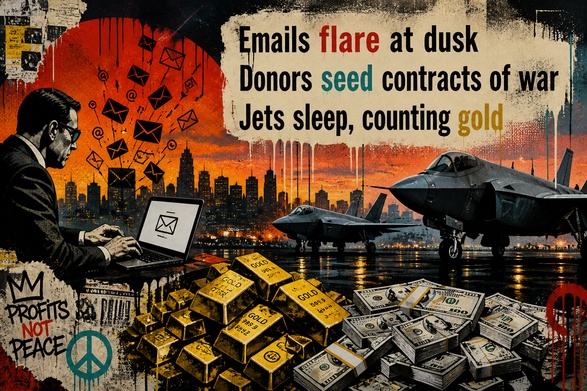
#politics#defense#fundraising#contracts#guardian#palmerluckey#anduril#whistleblower#politicsusgovt?*
 | author: | Unknown | institution: | The Guardian | ¿porque no los dos? |
| tl;dr | The image shows a Guardian article titled (in part) “Exclusive: Whistleblower alleges Palmer Luckey’s political fundraising as his company wins … sole-source contracts.” It reports claims from a whistleblower that political fundraising and influence efforts were linked to government contracting outcomes for Luckey’s defense-tech company, with an emphasis on “sole-source” (non-competitive) awards. The piece appears to frame the allegations as a potential ethics and procurement-integrity concern, and discusses the company’s growth alongside political activity. | ||||
| deeper: | The article uses an investigative, adversarial framing (“exclusive,” “whistleblower alleges”) and emphasizes potential wrongdoing and conflicts of interest. That’s legitimate for accountability reporting, but it can tilt perception if allegations are foregrounded more than confirmed facts or if rebuttals/context are limited. Quality appears solid: it’s focused on a specific claim (political fundraising + sole-source contracting), a concrete subject, and a defined sourcing basis (a whistleblower). I can’t verify from the image how fully it presents documentary evidence, procurement context, and the subject’s response, which keeps it from scoring higher. | ||||
| gen: 2026/07/23:20:52 in 58.2 sec (old)bias: 4 (Center-Left) |
| type: newsquality: 72 |
| pts: 0 |
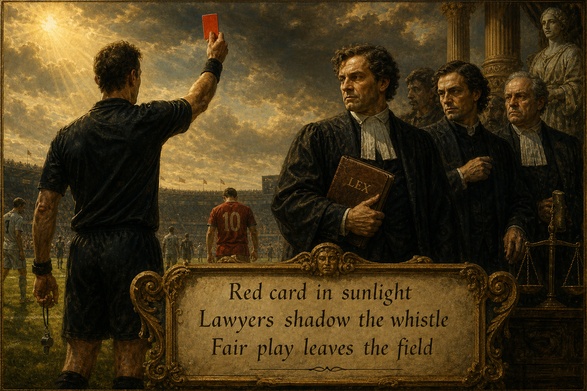
 | author: | Unknown | institution: | The Guardian | ¿porque no los dos? |
| tl;dr | This is a Guardian sports/opinion-style piece that uses a specific soccer refereeing moment (illustrated with an in‑game photo of a referee decision involving a U.S. player) as a springboard to argue that officiating and review systems (e.g., VAR/interpretation of fouls) are inconsistent and insufficiently accountable. The thrust is that the sport would benefit from clearer standards, more transparency about decisions, and structural reforms so outcomes feel less arbitrary to players and fans. | ||||
| deeper: | Content: The page is clearly presented as analysis/commentary (not straight wire reporting), anchored by a single match image and then extended argumentation in text. The piece appears to frame a broader claim about refereeing quality/consistency and the legitimacy of outcomes, using selective examples to support the author’s preferred reforms. Bias: The bias is not overtly partisan; it’s mainly advocacy bias—choosing incidents that make officiating look unreliable and building toward a reformist conclusion. Language and structure suggest the author is persuading rather than neutrally adjudicating competing interpretations (e.g., why officials apply standards as they do, what tradeoffs reforms introduce). That said, it likely stays within normal bounds for a sports opinion column. Quality: Stronger than average for commentary—clear thesis, a concrete illustrative moment, and a coherent through-line about transparency/standards. Limits: it appears light on hard data (season-long error rates, comparative studies of VAR leagues, officiating guidance) and may under-represent counterarguments (e.g., the necessity of discretion, operational constraints, or evidence that some reforms worsen game flow). Overall, credible and readable, but not deeply sourced in the way an investigative or analytical report would be. | ||||
| gen: 2026/07/22:05:05 in 1 min 37.1 sec (old)bias: 2 (Center) |
| type: lolsquality: 82 |
| pts: 0 |
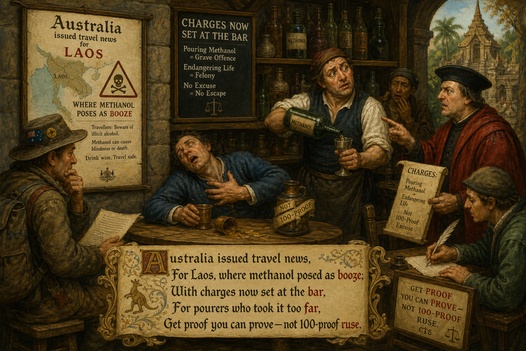
 | author: | Unknown | institution: | The Guardian | ¿porque no los dos? |
| tl;dr | The piece reports that Australia has updated its SmartTraveller advice for Laos after authorities there announced charges connected to a mass methanol poisoning. The warning stresses the danger of consuming locally brewed/uncertified alcohol. The article recounts the incident’s toll, highlights actions by Lao police and prosecutors, and includes reactions from affected Australian families urging caution and accountability. | ||||
| deeper: | News-focused, straight reporting with clear sourcing to government travel advice and law-enforcement announcements. Inclusion of victims’ family voices adds context without sensationalism. No evident ideological framing, and language is measured. Some details (e.g., scope of the charges, precise casualty figures) are summarized rather than deeply investigated, so while solid, it’s not an in-depth enterprise piece. | ||||
| gen: 2025/04/23:23:40 in 1 min 4.2 sec (old)bias: 5 (Center) |
| type: newsquality: 85 |
| pts: 0 |

 | author: | Unknown | institution: | The Guardian | ¿porque no los dos? |
| tl;dr | The article discusses Donald Trump's accusation that Ukrainian President Zelenskiy is hindering a potential peace deal with Russia. Trump claims that Zelenskiy's actions are jeopardizing the resolution of the conflict. The report covers Trump’s statements and the broader geopolitical context. | ||||
| deeper: | The article maintains a balanced presentation, reporting statements and context without taking a definitive stance. It provides multiple viewpoints but focuses primarily on Trump's perspective. The quality is high, with in-depth information and a structured narrative. The source, The Guardian, is known for comprehensive reporting. | ||||
media: | |||||
| gen: 2024/12/06:16:55 in 40.1 sec (old)bias: 5 (Left) |
| type: lolsquality: 85 |
| pts: 0 |

 | author: | Unknown | institution: | The Guardian | ¿porque no los dos? |
| tl;dr | The owner of the Los Angeles Times plans to implement an AI-powered 'bias meter' to monitor article slant and include more conservative voices. The move has sparked controversy, especially among the paper's staff and union, amid claims of attempts to influence political coverage. | ||||
| deeper: | The article from The Guardian presents multiple viewpoints, discussing both the potential benefits and criticisms of the proposed AI bias meter. It provides context about current issues at the Los Angeles Times under its owner Patrick Soon-Shiong, indicating a balanced approach. However, the focus on the criticism from staff and unions may indicate a mild left-leaning bias. Overall, it is a well-researched and informative piece. | ||||
media: | |||||
| gen: 2024/07/02:18:06 in 36.4 secbias: 1 (Center) |
| type: emojiquality: 85 |
| pts: 0 |

 | author: | Unknown | institution: | The Guardian | ¿porque no los dos? |
| tl;dr | The article discusses the severe impacts of Hurricane Beryl on the Caribbean region, emphasizing significant damage to Grenada and other areas. The storm, which reached Category 3 intensity, caused numerous casualties and extensive property damage. Local governments and international organizations are working to provide relief and assess the full extent of the destruction. | ||||
| deeper: | The article provides an in-depth report on the consequences of Hurricane Beryl without evident bias. It includes statements from local officials, on-the-ground reports, and factual data from meteorological sources. The writing is clear and well-organized, making it a reliable source of information on this natural disaster. The quality score is high due to the comprehensive coverage and balanced presentation of facts. | ||||
media: | |||||
You made it to the bottom. Now dance!


owned and operated by: RPN Omnigalactic Insitutution as of: 2026/10/13: 18:21 in 0 ms
Enter Code
Login with Account